
What 1.25 million Yes votes on Question 7 tell us

What 1.25 million Yes votes on Question 7 tell us
Question 7: What went wrong and what’s next
By Greg Reibman and Max Woolf
As of 6 a.m. Friday morning, Massachusetts voters appear to have rejected Question 7, the ballot measure that would have capped minimum lot size requirements for single-family homes at 5,000 square feet.
This common-sense reform could have unlocked thousands of new homes. Estimates ranged from a conservative 750 a year to more than 5,000 a year.
More importantly, it would have begun undoing decades of exclusionary zoning that encouraged McMansions and pushed starter homes toward extinction.
We enthusiastically endorsed the measure.
Greg was one of the first ten signers of the original petition to get it on the ballot. Your chamber was the first business association in Massachusetts to endorse it.
We did so because we believed it would help the suburban communities we serve—and many others—create homes young professionals could afford where they grew up or near jobs. Homes for teachers and police officers in the towns they serve. Homes where seniors could downsize without abandoning their neighborhoods.
Instead, the status quo appears to have prevailed, by a margin hovering around 51% to 49%.
We haven't fully abandoned hope. But here are our thoughts on what went wrong and, more importantly, the opportunity ahead.
Those who voted ‘no’ didn’t know
Question 7 was designed to be as unoffensive as possible.
While the MBTA Communities Act required cities and towns — some unaccustomed to large apartment buildings — to zone for multifamily housing, Question 7 took almost the opposite approach.
It would have opened the door to the very type of housing opponents to new growth often claim they want to preserve, single-family homes. Homes they, their parents or grandparents owned. Homes now being bulldozed for McMansions.
Here's an often under-explained detail: Question 7 applied only to properties with access to public water and sewer — effectively excluding more than 78% of Massachusetts' land area.
That should have reassured those in rural communities worried about infrastructure and development. Instead, the communities where the law wouldn't have applied were among its strongest opponents.
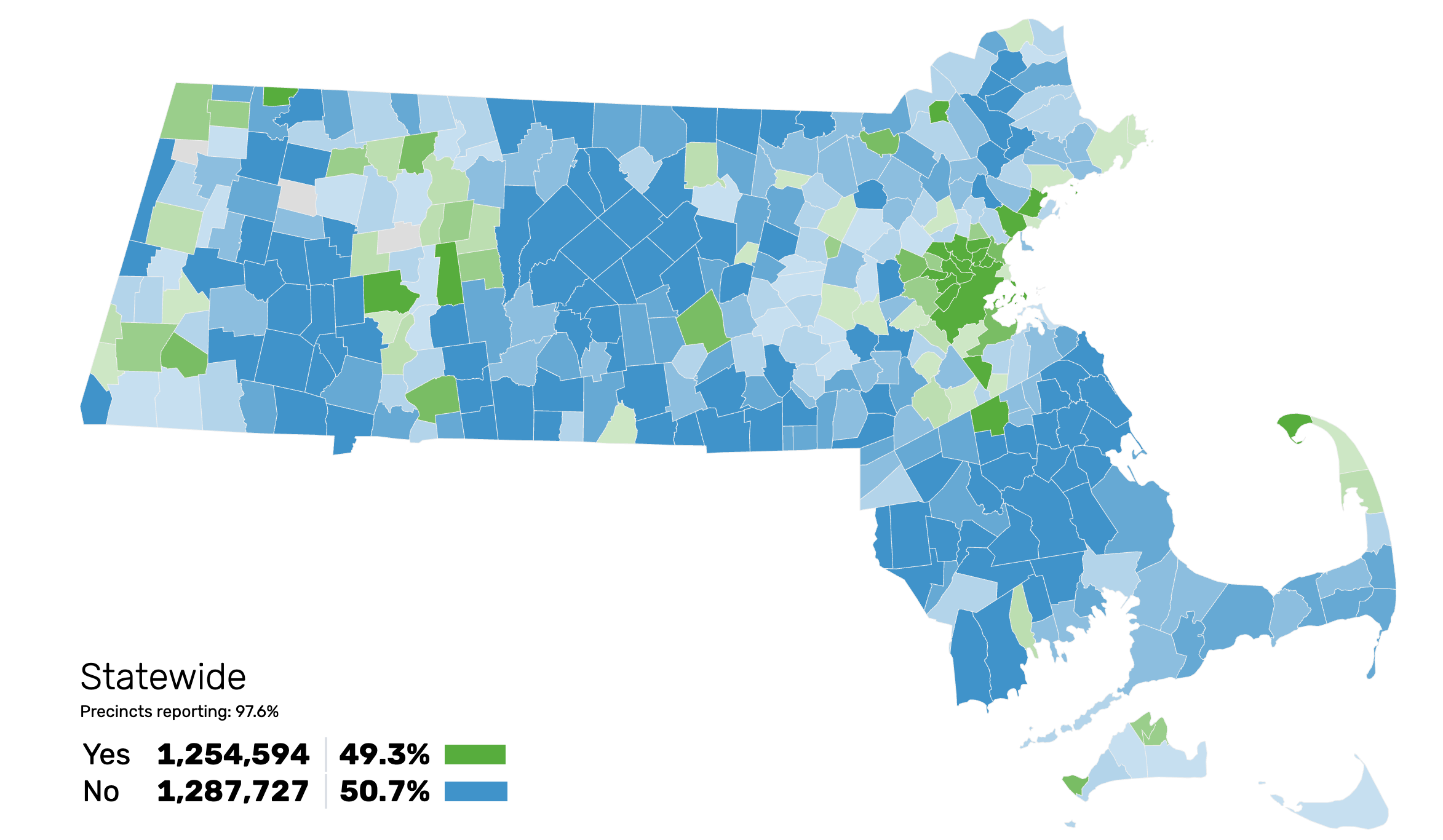
- Municipalities with 90% to 100% sewer coverage supported Question 7 by more than 10 points.
- Municipalities with no sewer coverage, where the law would not have applied, rejected it by more than 20 points.
In other words, many voters appear to have opposed changes they feared would come to their backyards, even though it would have had little or no impact in their neighborhoods or town.
The places where Question 7 could have done the most good were generally supportive. The places where it would have done the least helped defeat it.
With a margin this small, that mattered.
We needed a Mamdani

Question 7 itself was conceived by Andrew Mikula, a long-time Wellesley housing advocate and chief housing economist at Pioneer Institute (he led this effort outside his day job).
Mikula is a soft-spoken, thoughtful, clear-headed thinker. He tirelessly championed this effort and was its ever-present face, voice and heart. He had support from Abundant Housing Massachusetts, CHAPA, Eastern Bank's Bob Rivers and others.
Plus endorsements from the Globe, the New York Times, even the Herald.
We have nothing but respect and admiration for what Mikula achieved.
But the Yes campaign lacked the political muscle we saw, for example, this week in New York City.
There, Mayor Zohran Mamdani championed a successful push for five ballot proposals aimed at streamlining government processes, cutting red tape and accelerating development.
OK, we don't have a Mamdani. We're not New York.
Yes, Gov. Maura Healey and Lt. Gov. Kim Driscoll endorsed the measure. But they were understandably focused on their own reelection.
Sen. Ed Markey was running too. He announced he was voting Yes just days before the election, in a single social media post. He could have done more.
And where was Sen. Elizabeth Warren, who shepherded bipartisan legislation to expand housing production this year and has made housing affordability a major focus of her work?
Only Rep. Jake Auchincloss was an early champion of Question 7. Rep. Bill Keating is the only other House member on the list of official endorsers.
With a margin this small, that mattered.
Was the message just too wonky?
Here's something else we've been wrestling with: Did voters actually understand what Question 7 would do?
Minimum lot sizes aren't exactly intuitive. Explaining zoning requires striking a delicate balance: too much technical detail loses voters. Too little leaves room for confusion and misinformation.
The campaign, operating on a limited budget, struggled with that balance.
Consider its sole television ad. The 30-second spot offered just one explanation: "Yes on Question 7 will help us build the homes we need."
True. But that was about it. And the dense, technical language voters encountered on their ballots probably didn't help.
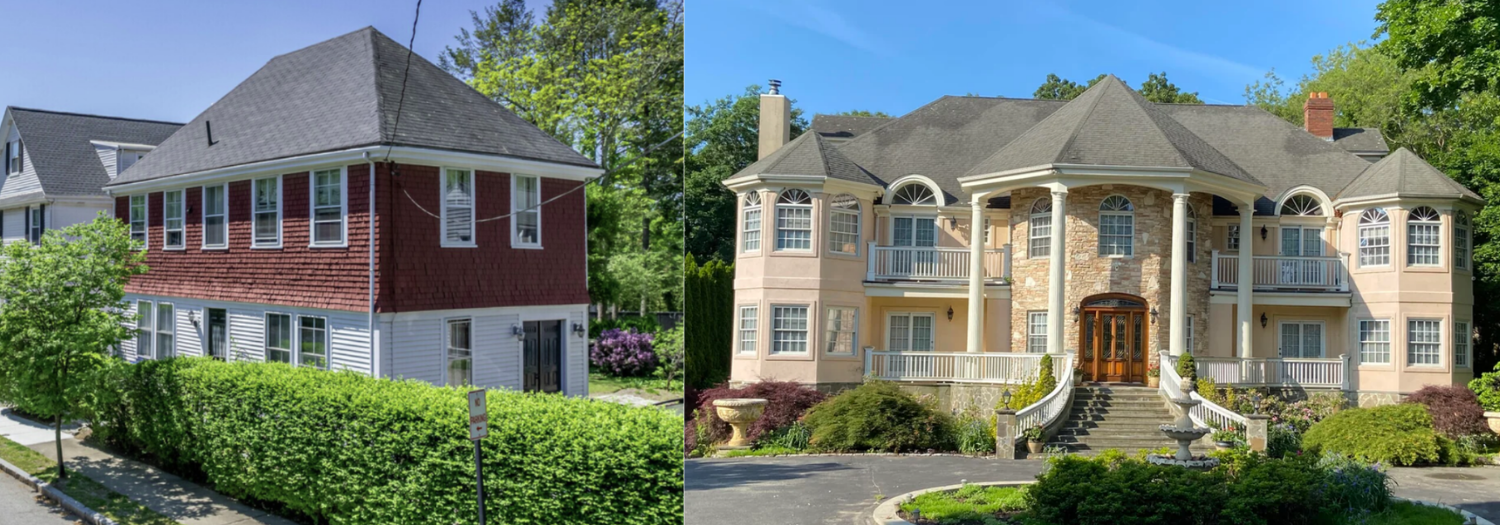
Explaining that "smaller lots mean smaller houses, which can mean cheaper houses" would have been a good start. Helping people understand that 5,000 SF is about the size of an NBA basketball court would have helped too.
So would positioning it as the alternative to mansionization.
Nobody loves when a McMansion springs up in their neighborhood. It's the one thing NIMBYs and YIMBYs both agree on.
With a margin this small, this mattered.
OK, so now what?
Despite our disappointment, we see a silver lining.
Cities and inner suburbs embraced Question 7. Those city and town halls should take notice.
That includes our five-community Charles River Regional Chamber footprint, where Question 7 passed by 13.5 points.
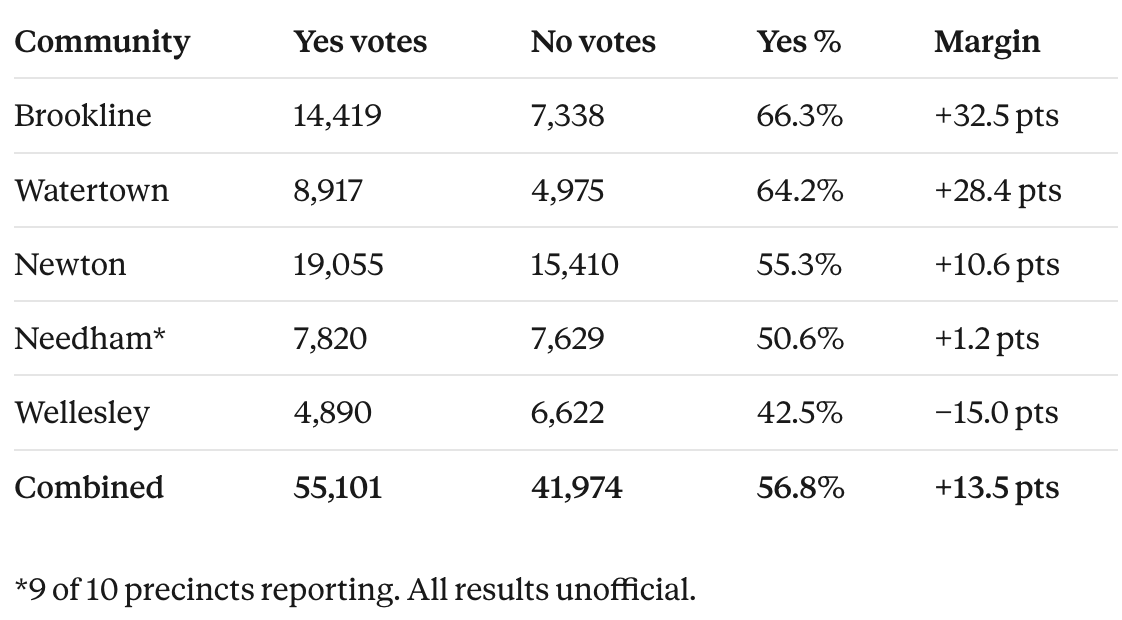
Brookline voted Yes by 32.5 points. Wellesley was our lone exception, rejecting the measure by 15 points.
These results should send a message to local leaders. Parts of Newton and Brookline (and Wellesley, too) still require single-family lots five to eight times larger than what Question 7 would have allowed.
At the high end, that's nearly a football field without the end zones.
Allowing 5,000-SF lots locally could help stem mansionization. It would create opportunities for smaller, more affordable homes in some of the state's most expensive markets. Opportunities for folks to stay here. Opportunities for others to enjoy our special communities. Customers for our local businesses.
Voters here have spoken. We call on city councils and select boards in our communities — and in communities across Massachusetts that supported Question 7 — to act.
Finally, what about the state?
The narrow defeat of this small, simple reform measure may tempt some Beacon Hill lawmakers to retreat from top-down state zoning reforms.
But retreating doesn’t address our soul-crushing housing crisis. Courage does.
Doing nothing is driving young adults out of state, leaving seniors stuck in homes they can't maintain and businesses struggling to attract and retain talent.
This week, more than 1.25 million Massachusetts voters said Yes on Question 7. They want to loosen exclusionary zoning rules, even at the expense of some local control. That's hardly a ringing endorsement of the status quo.
We urge House and Senate lawmakers to approve two important proposals in the pending economic development bill: legislation to legalize duplexes statewide and YIGBY, which would make it easier for religious institutions to develop multifamily housing on their property.
Then we need to keep pushing. Keep moving forward. Keep building.
We need to act as if future generations are depending on us, because they are.
With a crisis this large, this matters.
That’s what you need to know for today. We value your feedback
Charles River Regional Chamber